Africa’s combined stock market capitalization runs into hundreds of billions of dollars, but some industry datasets place the broader value of African exchange listings at approximately $2 trillion.
The difference arises from how market capitalization is calculated.
Market capitalization measures the total market value of a company’s outstanding shares. For an exchange, it represents the combined capitalization of the companies included in the calculation.
How Large Are Africa’s Equity Markets?
The OECD’s Africa Capital Markets Report 2025 identified 1,141 listed companies across African exchanges and found that South Africa, Morocco, and Egypt accounted for approximately 80% of the domestic equity market capitalization covered by its study.
Meanwhile, the African Securities Exchanges Association reports approximately $2 trillion in market capitalization across its represented markets.
These figures should not be treated as interchangeable. Some exchange-level statistics include foreign companies, secondary listings, or international businesses whose valuations are not entirely attributable to African domestic issuers.
Which African Exchanges Are the Largest?
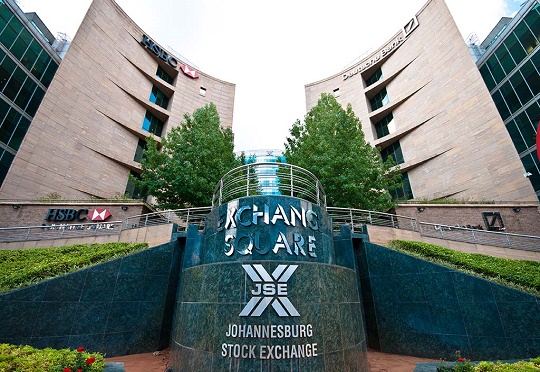
South Africa’s JSE is the dominant exchange by broad listed capitalization measures.
Other significant markets include Morocco’s Casablanca Stock Exchange, Egypt’s EGX, and Nigeria’s NGX.
In West Africa, the BRVM provides a regional market for companies operating across 8 countries.
Does a Larger Market Mean Better Investment Opportunities?
Not necessarily.
Market capitalization measures size, not profitability, liquidity, or expected returns.
A smaller exchange may contain financially strong businesses with attractive valuations, while a large market may contain expensive or highly cyclical companies.
Investors should examine company fundamentals alongside market size.
Explore African market valuations and listed companies through Daba Capital Markets.