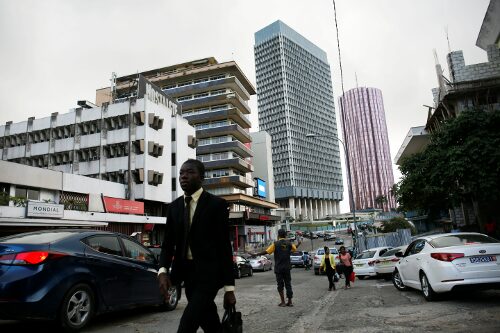
Africa’s economic outlook for 2026 reflects continued growth alongside challenges related to inflation, government debt, currency movements and global economic uncertainty.
According to the International Monetary Fund’s October 2026 Regional Economic Outlook, sub-Saharan Africa is projected to grow by 4.5% in 2026 and 2027.
However, economic conditions vary significantly across African countries, with differences in trade, industrial development, fiscal policy and access to international capital.
What Is Driving African Economic Growth?
Several factors support economic activity across the continent.
Population growth contributes to demand for housing, telecommunications, banking and consumer products.
Infrastructure investment supports construction, transportation and electricity development.
Natural resources also remain economically important.
Oil, gold, copper, cocoa and other commodity exports contribute to foreign exchange earnings in several African countries.
Economic reforms can also influence investment by improving financial infrastructure, trade conditions and capital allocation.
Inflation Remains an Important Challenge
Inflation affects consumer purchasing power and business operating costs.
The IMF’s October 2026 assessment indicates that inflation pressures remain a concern across parts of sub-Saharan Africa.
The regional median inflation rate is projected to increase from 3.4% in 2025 to 5.0% in 2027.
Higher food, energy and transportation costs can reduce household spending.
For businesses, inflation may increase production expenses and weaken profitability.
Companies with stronger pricing power may be better positioned to manage these pressures.
Government Debt and Financing Costs
Government debt is another important factor influencing Africa’s economic outlook.
The IMF estimates that debt servicing consumes approximately 12% of government revenue across sub-Saharan Africa.
High borrowing costs can limit public spending and reduce the resources available for infrastructure development.
They can also influence domestic interest rates and the cost of financing for businesses.
Investors purchasing government or corporate bonds should consider interest-rate risk and the issuer’s ability to meet payment obligations.
What Does Economic Growth Mean for African Stocks?
Economic expansion can support corporate revenue and earnings, but GDP growth does not guarantee stock market gains.
Banks may benefit from increased financial activity, while telecommunications companies may gain from higher demand for mobile services.
Manufacturers may benefit from infrastructure and consumer spending but remain exposed to currency movements and energy costs.
Investors should assess individual company performance rather than relying solely on national economic forecasts.
Which African Markets Should Investors Watch?
Africa’s 10 largest stock exchanges include those in South Africa, Nigeria, Morocco, Botswana, Egypt, West Africa, Kenya, Ghana, Zambia and Malawi.
These markets provide access to different sectors and economic conditions.
Investors can research companies through Daba Capital Markets.
For additional analysis, Daba Pro provides African equity research and market intelligence.
The bottom line: Africa’s economy is expected to continue expanding in 2026, but inflation, financing costs and external shocks remain significant risks. Investors should focus on sustainable company earnings, valuations and portfolio diversification.